


How to Plan a Successful Corporate Team Building Event

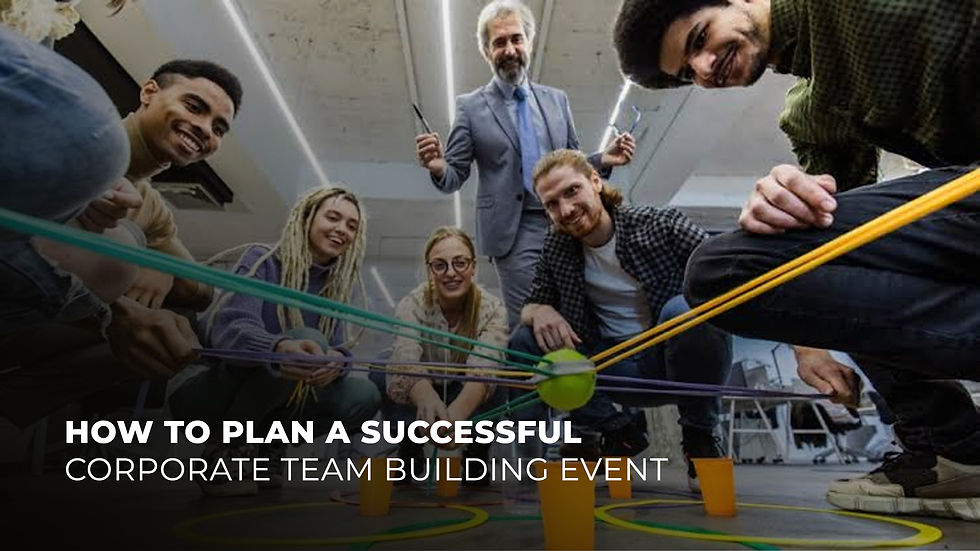
A successful Corporate Team Building Event should do more than give employees a day away from their desks. It should create opportunities for communication, collaboration, problem-solving and stronger workplace relationships.
From defining objectives and selecting activities to managing logistics and measuring results, every element should contribute to the overall employee experience.
What Is a Corporate Team Building Event?
A corporate team building event is a structured experience designed to help employees:
Build trust
Improve communication
Strengthen collaboration
Develop leadership skills
Solve problems together
Improve morale
Connect across departments
Increase employee engagement
Team building can take place as a standalone event or as part of a broader MICE program, corporate offsite, conference or incentive experience.
1. Define the Objective First
Before selecting an activity, determine what the organization wants to achieve.
Possible objectives include:
Improving communication
Building trust
Encouraging collaboration
Developing leadership
Breaking departmental silos
Improving employee morale
Encouraging creativity
Strengthening company culture
For example, if communication is the priority, an escape-room or communication challenge may be more appropriate than a conventional sports tournament.
2. Understand Your Employees
The best activity depends on the people participating.
Consider:
Age groups
Team size
Physical abilities
Interests
Work roles
Cultural considerations
Comfort levels
Not everyone will enjoy physically demanding or highly competitive activities.
Choose experiences that allow maximum participation.
3. Decide the Team Size
Different activities work for different group sizes.
Small Teams
Consider:
Escape rooms
Cooking challenges
Problem-solving games
Innovation workshops
Medium Teams
Consider:
Treasure hunts
Sports
Creative challenges
Team competitions
Large Groups
Consider:
Amazing Race
Multi-station challenges
Large-scale quizzes
Corporate games
Multiple simultaneous activities
4. Choose the Right Format
Corporate team building can take many forms.
Indoor
Escape rooms
Quizzes
Workshops
Puzzles
Creative challenges
Outdoor
Adventure activities
Sports
Treasure hunts
Obstacle courses
Amazing Race
Experiential
Cooking
Art
Music
CSR activities
Innovation challenges
Virtual or Hybrid
Online games
Digital challenges
Virtual quizzes
Collaborative problem-solving
5. Select the Right Venue
The venue should match both the activity and the number of participants.
Consider:
Capacity
Location
Accessibility
Parking
Indoor/outdoor space
Restrooms
Food facilities
Power
Safety
Weather protection
Emergency access
For large corporate events, having both indoor and outdoor options can provide greater flexibility.
6. Create Balanced Teams
Team composition can influence the entire experience.
Instead of allowing employees to simply choose their friends, consider creating mixed teams.
For example:
Sales + HR + Finance + Marketing + Operations
This encourages employees to interact with colleagues they don't normally work with.
7. Design Activities Around the Objective
Every activity should have a purpose.
Objective | Activity |
Communication | Blind Drawing |
Collaboration | Build Challenge |
Problem-Solving | Escape Room |
Leadership | Team Leadership Challenge |
Creativity | Brand Challenge |
Networking | Human Bingo |
Energy | Sports Challenge |
Innovation | Hackathon |
Social Impact | CSR Activity |
The objective should determine the activity—not the other way around.
8. Create a Clear Event Flow
A well-structured schedule keeps employees engaged.
For example:
WELCOME
↓
ICEBREAKER
↓
TEAM FORMATION
↓
MAIN CHALLENGE
↓
LUNCH
↓
SECOND CHALLENGE
↓
FINAL COMPETITION
↓
AWARDS
↓
CELEBRATION
Avoid scheduling too many activities without sufficient breaks.
9. Include Icebreakers
Employees may initially feel uncomfortable participating in unfamiliar activities.
Start with simple icebreakers such as:
Human Bingo
Two Truths and a Lie
Quick Trivia
Team Introductions
Speed Networking
This helps create an energetic atmosphere.
10. Balance Competition and Collaboration
Competition can create excitement, but excessive competition can reduce inclusiveness.
The Pivot Point is designing activities where teams compete while still encouraging:
Communication
Cooperation
Respect
Problem-solving
Participation
The objective should be stronger relationships—not simply identifying winners.
11. Add a Creative Challenge
Creative activities can reveal different employee strengths.
Try:
Build-a-Brand
Short Film Challenge
Team Poster
Product Pitch
Photography Challenge
Music Challenge
These activities can be particularly effective for mixed departments.
12. Include a Problem-Solving Challenge
Give teams a situation that requires collective thinking.
For example:
"Your team has ₹1 lakh and 24 hours to create a launch strategy for a new product."
Teams must:
Analyze the problem
Divide responsibilities
Develop a solution
Present their idea
This combines team building with practical business skills.
13. Consider a CSR Activity
Team building can also create social impact.
Examples include:
Tree planting
Community projects
School support
Environmental activities
Volunteering
Donation initiatives
This can connect teamwork with a larger organizational purpose.
14. Make It Part of a MICE Experience
Team building can become a powerful component of MICE.
A corporate program could include:
Meeting
↓
Conference
↓
Team Building
↓
Incentive Experience
↓
Networking
↓
Corporate Dinner
↓
Awards
Instead of a standalone activity, employees experience a complete corporate journey.
15. Use Technology Strategically
Technology can make team building more interactive.
Consider:
QR-based challenges
Event apps
Digital scoring
Live leaderboards
Interactive screens
Live polling
GPS-based challenges
Digital quizzes
Technology should function as a Lever for engagement rather than becoming a distraction.
16. Capture the Experience
Don't let the experience disappear after the event.
Arrange:
Professional photography
Videography
Team photographs
Behind-the-scenes content
Short-form videos
Highlight films
Hybrid Content Creators can capture quick social-first content while the professional event team handles the main documentation.
17. Plan Food and Hospitality
Employee experience also depends on basic comfort.
Plan:
Breakfast
Lunch
Snacks
Beverages
Dietary requirements
Water stations
Rest areas
For outdoor activities, hydration and appropriate breaks are particularly important.
18. Prioritize Safety
Safety should be considered before the activity begins.
Check:
Venue safety
Equipment
Qualified facilitators
First-aid arrangements
Emergency access
Weather conditions
Participant requirements
For adventure activities, use experienced and appropriately qualified operators.
19. Have a Contingency Plan
Prepare alternatives for:
Rain
Extreme weather
Technical failures
Activity cancellations
Transportation delays
Medical situations
Venue problems
For outdoor events, always have an indoor or covered backup option where practical.
20. Use Professional Facilitators
A professional facilitator can:
Explain rules
Manage teams
Maintain energy
Resolve disputes
Keep activities on schedule
Connect activities to learning outcomes
This allows company leadership to participate instead of managing the event.
21. Add Recognition and Rewards
End the event by celebrating participation.
Awards could include:
Winning Team
Best Team Spirit
Most Creative Team
Best Collaboration
Problem Solver Award
Leadership Award
Most Energetic Team
Recognition adds a strong conclusion to the experience.
22. Measure Employee Engagement
Don't judge success only by whether employees appeared to enjoy themselves.
Measure:
Participation
Employee satisfaction
Team interaction
Activity completion
Feedback
Cross-department interaction
Overall engagement
Ask employees what they learned and what they enjoyed.
23. Collect Feedback
A short post-event survey can reveal what worked.
Ask:
How would you rate the event?
Which activity did you enjoy most?
Did you interact with new colleagues?
Did the event improve teamwork?
What should we change next time?
Use the results to improve future events.
24. Calculate the Event ROI
A simple measurement framework can include:
Event Cost
vs.
Employee Participation + Engagement + Satisfaction + Business Outcomes
Track metrics such as:
Cost per employee
Participation rate
Satisfaction score
Engagement score
Cross-team interactions
Retention indicators
Not every team building outcome can be directly converted into revenue, so non-financial outcomes should also be considered.
25. Build a Long-Term Team Culture
A single team building event cannot transform workplace culture overnight.
Use it as part of an ongoing strategy involving:
Regular team activities
Employee recognition
Learning sessions
Corporate offsites
Wellness activities
MICE experiences
Leadership programs
This creates a continuous culture of collaboration.
Finding the Fulcrum Between Fun and Learning
The Fulcrum of successful team building is the balance between:
FUN
COLLABORATION
LEARNING
BUSINESS OBJECTIVES
Employees should enjoy the experience while developing stronger relationships and useful skills.
Finding the Pivot Point Between Competition and Collaboration
The Pivot Point is designing competition that encourages people to work together rather than simply defeat another team.
The strongest activities reward:
Communication
Creativity
Strategy
Leadership
Teamwork
—not just speed or physical ability.
Team Building as a Lever for Employee Engagement
Team building can be a Lever for improving employee engagement when it becomes part of a broader employee experience strategy.
Combine it with:
Recognition
Incentive programs
Corporate events
Learning
Wellness
MICE experiences
This gives employees repeated opportunities to connect beyond their regular roles.
Create a Team Building Legacy
Document the experience and build traditions around it.
Organizations can create:
Annual team championships
Inter-department competitions
Team awards
Event highlight films
Recognition boards
Annual challenges
Over time, these experiences can become part of the organization's Legacy and culture.
Sample One-Day Corporate Team Building Plan
Time | Activity |
9:00 AM | Breakfast & Registration |
10:00 AM | Icebreaker |
10:30 AM | Team Formation |
11:00 AM | Problem-Solving Challenge |
12:30 PM | Team Presentation |
1:00 PM | Lunch |
2:30 PM | Amazing Race |
4:30 PM | Creative Challenge |
5:30 PM | Team Showcase |
6:00 PM | Awards |
6:30 PM | Networking |
7:30 PM | Corporate Dinner |
Corporate Team Building Planning Checklist
☐ Define objectives☐ Understand employees☐ Decide team size☐ Set budget☐ Select venue☐ Choose activities☐ Create balanced teams☐ Plan event flow☐ Arrange facilitators☐ Plan food and hospitality☐ Check safety☐ Prepare contingency plans☐ Arrange technology☐ Plan photography and videography☐ Include Hybrid Content Creators☐ Prepare awards☐ Collect feedback☐ Measure ROI☐ Document the experience
Why Choose Shreyas Corporate Club?

Shreyas Corporate Club provides customized Corporate Team Building and MICE Event Management Solutions designed around your organization's goals.
Our capabilities include:
Corporate Team Building
Employee Engagement Activities
Corporate Offsites
MICE Events
Incentive Experiences
Corporate Meetings
Indoor & Outdoor Activities
Adventure Experiences
Sports Events
Innovation Challenges
CSR Activities
Corporate Awards
Entertainment
Event Technology
Stage & AV Production
Photography & Videography
Hybrid Content Creators
Event Branding
Hospitality
Logistics
ROI Measurement
Our approach creates the Fulcrum between fun and learning, the Pivot Point between competition and collaboration, the Lever for employee engagement and the Legacy of stronger corporate teams.
FAQs
What is the first step in planning a corporate team building event?
Start by defining the objective. Determine whether the priority is communication, collaboration, leadership, creativity, employee engagement or another specific outcome.
How long should a corporate team building event be?
It can range from a few hours to several days depending on the activities, team size and whether it is part of a corporate offsite or MICE program.
What is the best team building activity for large groups?
Large-scale formats such as Amazing Race, multi-station challenges, quizzes and team competitions can work particularly well.
How can team building be included in MICE?
Team building can be integrated between meetings, conferences, networking sessions and incentive experiences to create a complete corporate journey.
How do you measure the success of team building?
Track participation, satisfaction, engagement, cross-team interaction and achievement of the original objectives.
Final Thoughts
A successful corporate team building event starts with one simple principle:
Don't choose an activity first. Choose the outcome first.
Once the objective is clear, the right activities, venue, format and experience can be designed around it.
When executed strategically, team building becomes more than a fun day away from the office. It becomes a Fulcrum for collaboration, a Pivot Point between employees and organizational culture, a Lever for engagement and a Legacy of stronger teams.


Comments