


How to Plan Event Catering for Corporate Guests

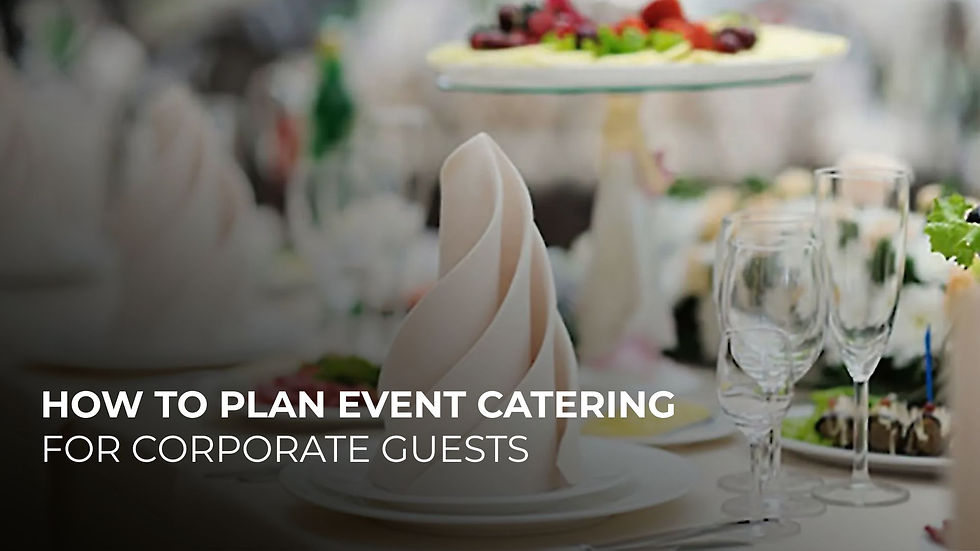
Food is one of the most remembered parts of a corporate event.
A great venue and impressive stage can create the first impression, but event catering directly influences how comfortable and satisfied guests feel throughout the experience.
Whether you're organizing a corporate conference, product launch, business summit, employee event, dealer meet, award ceremony or MICE program, catering requires much more planning than simply choosing a menu.
You need to consider the guest profile, event schedule, venue, budget, service style, dietary requirements, food quantities and overall hospitality experience.
This guide explains how to plan event catering for corporate guests from the initial planning stage through event-day execution.
Why Is Corporate Event Catering Important?
Catering affects both the guest experience and event operations.
Well-planned catering can help:
Keep guests comfortable
Maintain event schedules
Support networking
Improve hospitality
Accommodate dietary requirements
Reduce food wastage
Control costs
Create a professional experience
For corporate events, food service should complement the event rather than interrupt it.
Step 1: Understand the Event
Start by understanding the event itself.
Ask:
What type of event is it?
How many guests are expected?
How long will the event run?
Who are the attendees?
What is the event schedule?
Is it formal or casual?
Is the event indoor or outdoor?
Does the venue have catering restrictions?
Is alcohol service relevant and permitted?
A two-hour business meeting and a full-day conference require completely different catering plans.
Step 2: Understand Your Corporate Guests
Your menu should reflect the audience.
Consider:
Age group
Professional profile
Cultural preferences
Regional preferences
Event duration
Time of day
Guest expectations
For example, a formal executive dinner may require a very different menu and service style from an employee engagement event.
Step 3: Estimate the Number of Guests
Your guest list is the foundation of the catering plan.
Use:
Confirmed Guests + Expected Additional Attendance + Operational Buffer
Avoid ordering blindly based only on the number of invitations.
If 1,000 people are invited but only 650 have confirmed attendance, the catering plan should be based on the most reliable attendance estimate available.
At the same time, large events may require a reasonable operational buffer.
Step 4: Plan the Catering Budget
Set the catering budget early.
Your budget should consider:
Food
Beverages
Service staff
Equipment
Crockery
Cutlery
Tables
Service counters
Transportation
Setup
Cleaning
Taxes and applicable charges
Don't compare caterers only by their per-person food price.
Look at the complete catering package.
Step 5: Choose the Right Catering Style
Different event formats require different service styles.
Buffet
A popular option for conferences and larger corporate events.
Advantages:
Variety
Flexible portions
Faster service for large groups
Guests can choose what they prefer
Plated Service Event Catering
Food is served individually at the table.
Suitable for:
Formal dinners
Award ceremonies
Executive events
Cocktail / Canapé Service
Small portions are served while guests network.
Useful for:
Launches
Networking events
Receptions
Evening corporate gatherings
Food Stations
Different counters offer different food categories.
Examples:
Live dosa station
Pasta station
Chaat counter
Dessert station
Beverage counter
This can make the food experience more interactive.
Step 6: Plan the Menu
A corporate menu should offer enough variety without becoming unnecessarily complicated.
Depending on the event, consider:
Welcome Drinks
Fresh juices
Mocktails
Traditional beverages
Tea
Coffee
Starters
Include a balanced selection of vegetarian and non-vegetarian options where appropriate.
Main Course
Consider:
Rice
Breads
Vegetarian dishes
Non-vegetarian dishes
Dal
Regional specialties
Salads
Desserts
Offer a suitable mix of:
Indian sweets
Western desserts
Fruit
Ice cream
Pastries
The menu should fit the audience and event format.
Step 7: Include Regional Preferences
For events involving guests from different regions, regional food preferences can matter.
For example, an event in Hyderabad may consider including familiar local flavours alongside broader Indian or international options.
For multi-city or destination events, understand where attendees are coming from and what food options are likely to be comfortable and familiar.
Step 8: Plan Dietary Requirements
This is one of the most important parts of corporate catering.
Registration should ideally collect relevant requirements before the event.
These may include:
Vegetarian
Vegan
Jain
Food allergies
Gluten-related requirements
Other dietary restrictions
Clearly label suitable dishes wherever necessary.
The catering team should know how these requirements will be handled before guests arrive.
Step 9: Plan Beverage Service
Beverage planning should cover the complete event.
Depending on the format, consider:
Welcome drinks
Drinking water
Tea
Coffee
Fresh juices
Mocktails
Soft beverages
For conferences, tea and coffee breaks may need to be coordinated closely with the session schedule.
Step 10: Match Catering With the Event Schedule
Timing is critical.
For a full-day corporate conference, a schedule could include:
9:00 AM — Welcome Beverage
11:00 AM — Tea/Coffee Break
1:00 PM — Lunch
4:00 PM — Evening Break
7:30 PM — Dinner
The exact timings should be determined by the event program.
Catering should never cause unnecessary delays between sessions.
Step 11: Coordinate With the Event Program
The catering team needs access to the final event schedule.
For example:
If a keynote runs 20 minutes longer than planned, the lunch service may need to adjust.
The event manager and catering manager should therefore remain in communication throughout the event.
Step 12: Plan Food Quantities
Food quantities should be based on:
Confirmed guests
Expected attendance
Meal type
Event duration
Menu
Service format
Guest profile
Different foods have different consumption patterns.
An experienced caterer can help estimate quantities based on the event format and expected attendance.
Step 13: Consider Food Stations
For larger corporate events, food stations can improve guest flow.
Instead of creating one large queue, distribute service across multiple counters.
For example:
Indian Main Course
Asian Counter
Live Station
Salad Bar
Dessert Counter
Beverage Counter
This can also create a more engaging food experience.
Step 14: Plan the Catering Layout
The physical layout matters.
Consider:
Number of buffet counters
Guest movement
Table placement
Beverage stations
Dessert counters
Queue length
Seating
Service staff
Waste collection
Avoid creating bottlenecks near entrances or important event areas.
Step 15: Plan Service Staff
Food quality isn't enough.
You also need adequate staff for:
Buffet management
Table service
Beverage service
Guest assistance
Cleaning
Replenishment
Special dietary requests
Staff numbers should be determined according to the event size and service format.
Step 16: Conduct a Catering Tasting
For important corporate events, consider conducting a menu tasting before final approval.
Review:
Taste
Presentation
Portion size
Menu balance
Temperature
Beverage quality
Dessert quality
A tasting can help identify issues before event day.
Step 17: Verify the Catering Vendor
Before confirming a caterer, evaluate:
Experience
Previous corporate events
Food quality
Hygiene standards
Staffing capability
Kitchen setup
Equipment
Reviews or references
Ability to handle your guest count
Backup arrangements
For large events, catering capability should match the scale of the project.
Step 18: Understand Venue Restrictions
Some venues have specific rules regarding catering.
Check:
In-house catering requirements
Outside caterer permissions
Kitchen facilities
Food preparation areas
Gas/equipment restrictions
Service timings
Waste disposal
Cleaning
Loading and unloading
Confirm these details before finalizing the catering vendor.
Step 19: Plan Food Safety and Hygiene
Professional catering should prioritize food safety.
Consider:
Food handling
Storage
Temperature control
Clean preparation areas
Staff hygiene
Safe drinking water
Proper waste management
For large events, food safety planning becomes even more important.
Step 20: Create a Backup Plan
Unexpected problems can occur.
Consider backup arrangements for:
Caterer delays
Equipment failure
Power issues
Unexpected guest numbers
Weather for outdoor events
Menu shortages
Transportation delays
A professional event plan should always include contingencies for critical services.
Step 21: Manage VIP Catering
VIP guests may require additional hospitality planning.
Depending on the event, this may include:
Dedicated dining area
Special menu
Table service
Private hospitality
Dedicated beverages
Personal assistance
VIP requirements should be identified well before the event.
Step 22: Integrate Catering With Guest Management
Catering and registration should work together.
Your guest-management system can provide information about:
Confirmed attendance
Dietary preferences
VIPs
Special requirements
Guest categories
This information can help the catering team prepare more accurately.
Step 23: Plan Catering for MICE Events
MICE — Meetings, Incentives, Conferences and Exhibitions often requires catering across multiple experiences.
For example:
Airport Arrival
↓
Hotel Welcome
↓
Conference Breakfast
↓
Tea Break
↓
Business Lunch
↓
Networking Reception
↓
Gala Dinner
↓
Departure
The food experience can become part of the overall destination and hospitality experience.
Step 24: Reduce Food Waste
Good catering planning should balance guest satisfaction with responsible resource management.
Ways to reduce unnecessary waste include:
Use accurate RSVP data
Track attendance patterns
Coordinate replenishment
Avoid excessive menu duplication
Monitor buffet consumption
Adjust quantities during the event where possible
The objective is enough food without unnecessary excess.
Corporate Event Catering Checklist
Before the Event
☐ Define guest profile
☐ Estimate attendance
☐ Set catering budget
☐ Select catering style
☐ Shortlist caterers
☐ Check venue restrictions
☐ Finalize menu
☐ Conduct tasting
☐ Collect dietary requirements
☐ Confirm beverage requirements
Before Event Day
☐ Confirm final guest count
☐ Confirm quantities
☐ Confirm staff
☐ Confirm equipment
☐ Finalize catering layout
☐ Confirm service timings
☐ Brief catering team
☐ Prepare backup arrangements
Event Day
☐ Catering setup complete
☐ Food quality checked
☐ Buffet counters ready
☐ Beverage stations ready
☐ Staff briefed
☐ Dietary meals identified
☐ Food replenishment monitored
☐ Guest flow monitored
☐ Hygiene maintained
After the Event
☐ Review catering performance
☐ Check wastage
☐ Review guest feedback
☐ Verify invoices
☐ Record vendor performance
☐ Document learnings for future events
Common Corporate Catering Mistakes
Ordering Based Only on Invitations
Invitations don't necessarily represent actual attendance.
Ignoring Dietary Requirements
Always collect and communicate relevant requirements.
Too Many Menu Items
More isn't always better. A balanced menu can be more effective.
Poor Queue Management
Even good food can create frustration if guests have to wait too long.
Not Coordinating With the Schedule
Food service should fit naturally into the event program.
Choosing a Caterer Based Only on Price
Quality, reliability and capacity are equally important.
No Backup Plan
Large events should have contingency arrangements for critical catering issues.
How Shreyas Corporate Club Can Manage Corporate Event Catering

At Shreyas Corporate Club, catering can be treated as an important part of the overall corporate event experience.
The process can connect:
Guest Planning
↓
Attendance Forecast
↓
Menu Planning
↓
Catering Partner
↓
Hospitality
↓
Event Schedule
↓
Food Service
↓
Guest Experience
↓
Post-Event Review
For corporate events and MICE programs, the objective is not simply to serve food.
It is to create a hospitality experience that fits the event's brand, audience, schedule and overall concept.
Frequently Asked Questions
How do I plan catering for a corporate event?
Start by understanding the event, estimating attendance, setting a budget, selecting a catering format, developing the menu, collecting dietary requirements and coordinating food service with the event schedule.
How much food should I order for a corporate event?
The quantity depends on confirmed attendance, event duration, meal format, menu and guest profile. Work with an experienced caterer to determine appropriate quantities.
What food should be served at a corporate event?
The menu should match the audience, event format, time of day and budget. A balanced menu with suitable vegetarian and other relevant options is often appropriate.
Should corporate events offer vegetarian options?
Where relevant to the guest profile, yes. Dietary preferences should be considered during the registration process.
Final Thoughts
Corporate event catering is much more than selecting a menu.
It's about connecting:
People + Food + Timing + Hospitality + Experience
When attendance data, menu planning, service, logistics and guest requirements are managed together, catering becomes an integral part of a successful event.
Whether you're organizing a business meeting, large corporate conference or MICE program, thoughtful catering planning can help turn a standard gathering into a memorable experience.


Comments